
Cello Suite No. 1, one movement at a time.
I had the immense pleasure of spending all of September in the south of France, staying in one lovely home the entire time.🏡☀️ I’ve been working on the seven movements of Bach’s Cello Suite No. 1 for some time, and with so many fewer demands on my time, I was able to commit to a pretty stringent practice schedule of one to two hours most days. I rented a lovely cello in Nice, since bringing my own would have meant buying it a seat on the plane!! ✈️
The cello is a demanding instrument. There’s the obvious challenge of finding the right notes🎶, but underneath that is bow rationing and weight, dynamics, tempo, musicality, and many other small decisions happening at once. Many layers, all of which come together to create (hopefully) beautiful music bringing me joy. Each of those layers is a continuum. Lots of possibilities, in any moment for things to be going well, or, not so much. Sometimes I’d sit down and something that felt impossible the day before would suddenly be available to me. Other sessions, nothing seemed to move at all. 🥶
🧠 I’ve spent so much time thinking about continuums through SocialScales that I’ve become more observant about learning itself, mine included, including why it sometimes moves forward and sometimes seems to fall apart. How there are many layers underlying the learning of any skill or concept. You learn, slowly, how to keep going through a session that isn’t working, trusting that growth is still happening even when it doesn’t feel like it.🪴
👉 These aren’t observations about cello alone. They apply to learning of every kind, including the work we do with our students every day.
This past August, my dear friend and colleague Sarah Ward invited me to present at a wonderful two-day conference, Taking Executive Function to the Next Level: The Through-Line of Math, Writing, and Social Learning, in the beautiful surroundings of the Skola School in Whitefish, Montana. My own talk there was Making the Invisible Visible: Schema, Language & the Developing Social Self, where I shared, among other things, a SocialScale for understanding an assignment, first with possible thought bubbles at each point on the continuum, then layered with self-talk and strategies for moving from one position to the next. 🤔💭
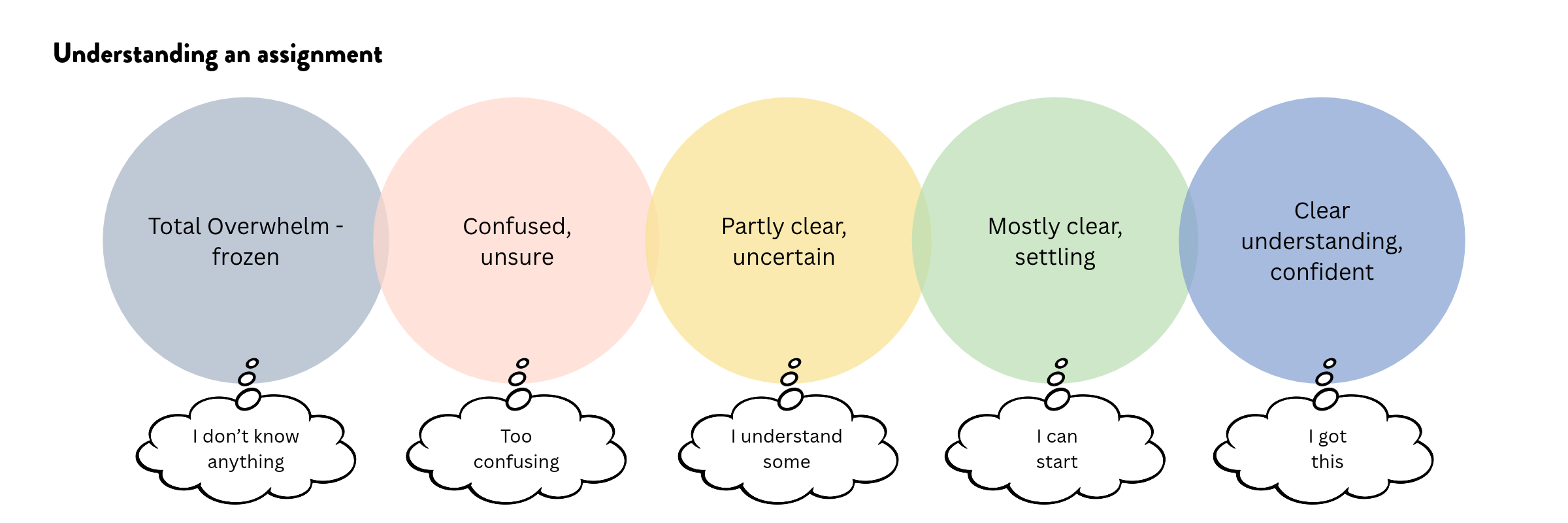
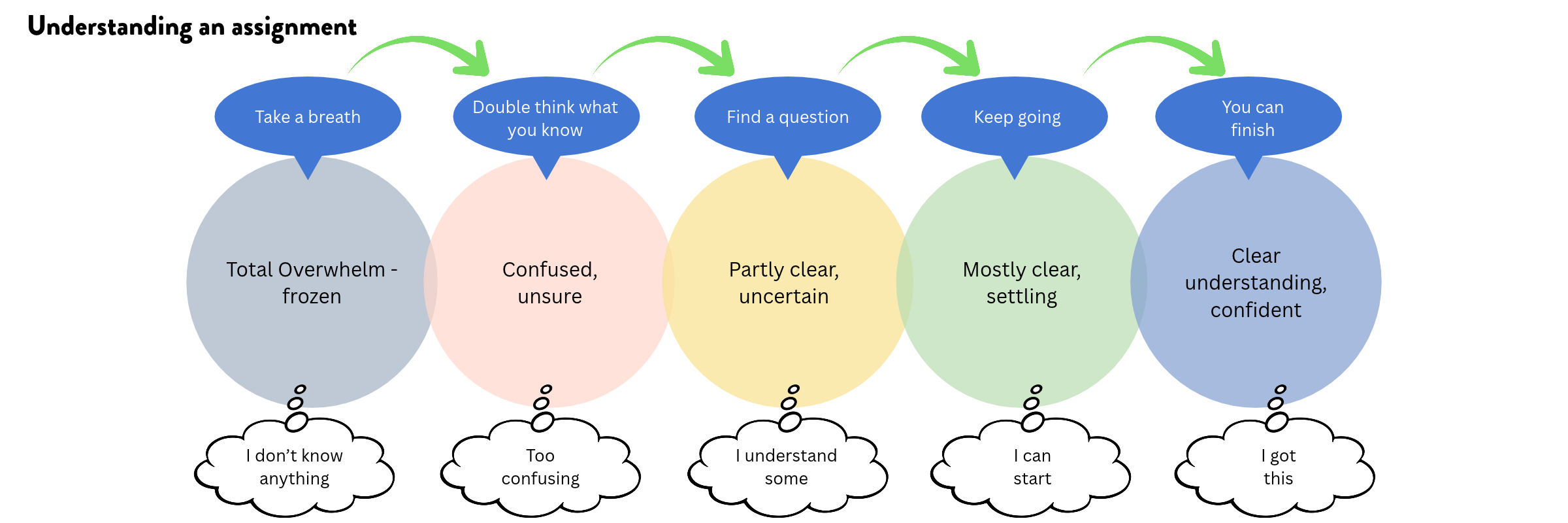
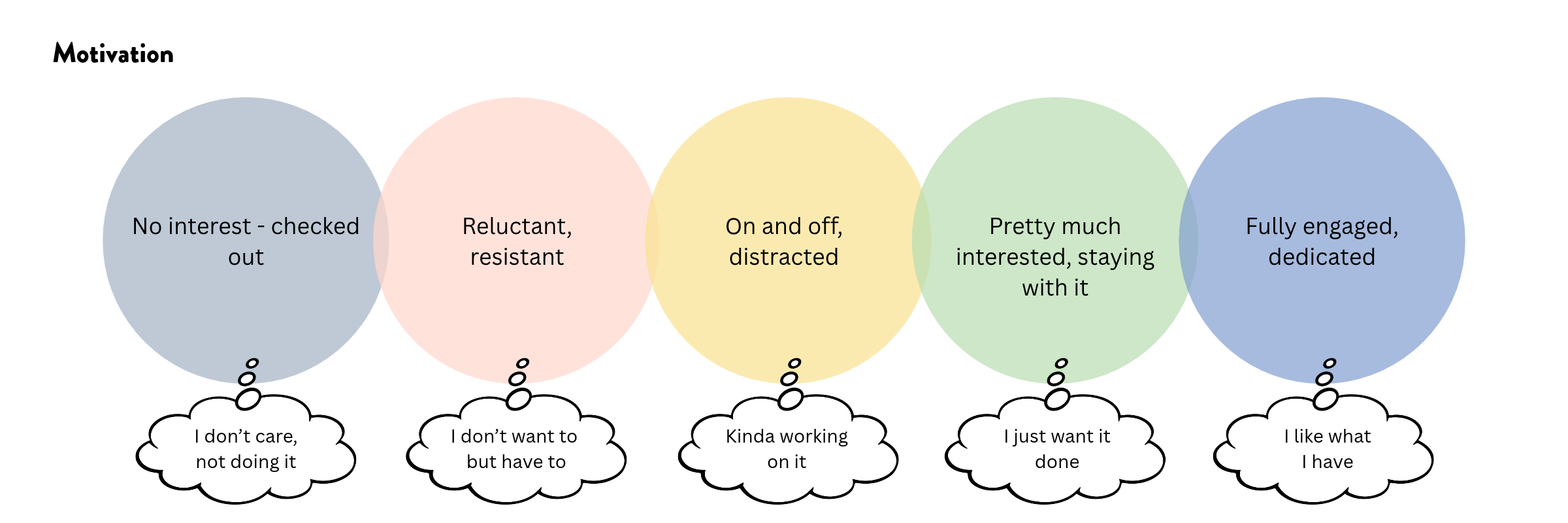
As we worked through developing these SocialScales, a question came from the audience: but what if the student understands the assignment, and still doesn’t want to do it? That’s a different, but completely relevant, problem, one that doesn’t belong with this first SocialScale set. Another layer relevant to assignments had revealed itself. 🧅
So, right there, we built a second set of SocialScales. Motivation turned out to need the same two layers: the thoughts themselves, and then the self-talk that can result in movement. Even when checked-out is the honest starting point. 🔽
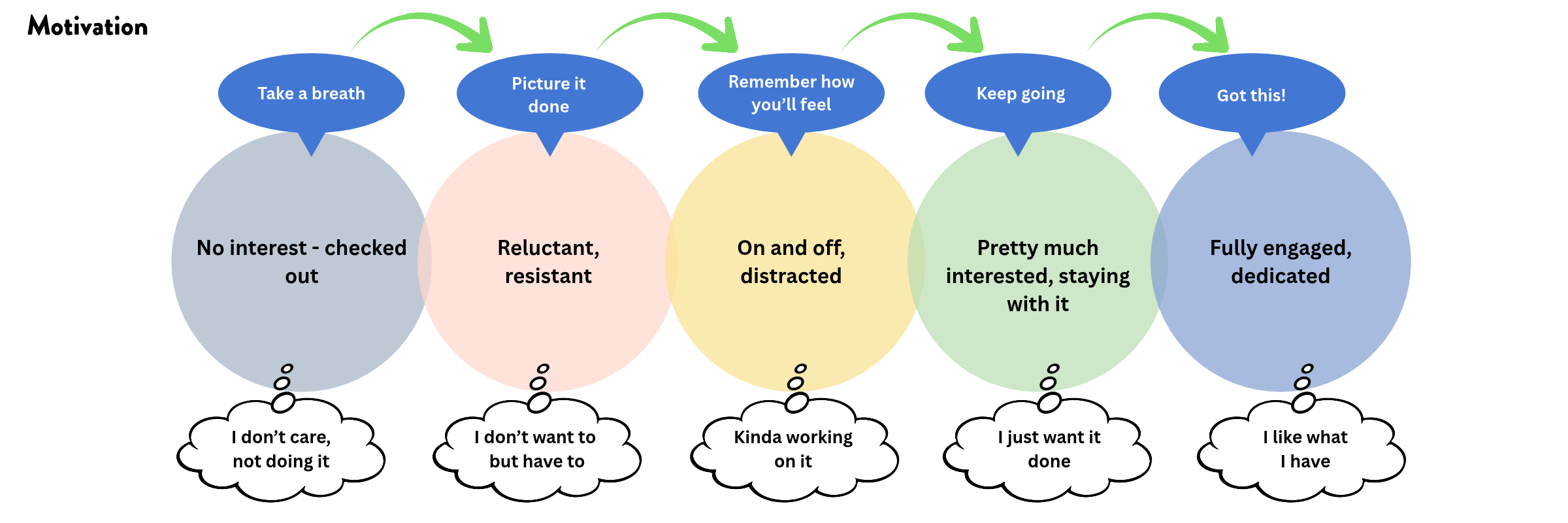
👀 Watching a new layer reveal itself in Whitefish reminded me of a few things I try to keep in mind every time I build a SocialScale with a student, whether it’s in a room full of colleagues or with students:
Let students supply their own wording. It takes longer, but the buy-in is worth it.
Add information to the slide bit by bit, through organic discussion. Don’t make it ahead of time. A SocialScale that arrives fully formed won’t have the impact of one that is created in real time.
Remember that the points along the continuum represent options, not “must-dos.” As adults, we’re not out to force change. We want students to see what’s possible, and then make the decision that is right for them in the moment.
Watch for sublayers hiding inside what looks like one idea. Don’t shy away from making additional SocialScales (or sets of SocialScales.) They won’t complicate things. They’ll clarify thinking.
I had the chance to put all this into practice again just last night.
A 6th grade student came from a tutoring session during which he had been introduced to a new math concept. ➕✖️ He resisted the learning, and became very upset. The tutor had emailed me, and the student confirmed that he gets upset whenever new material is presented to him.
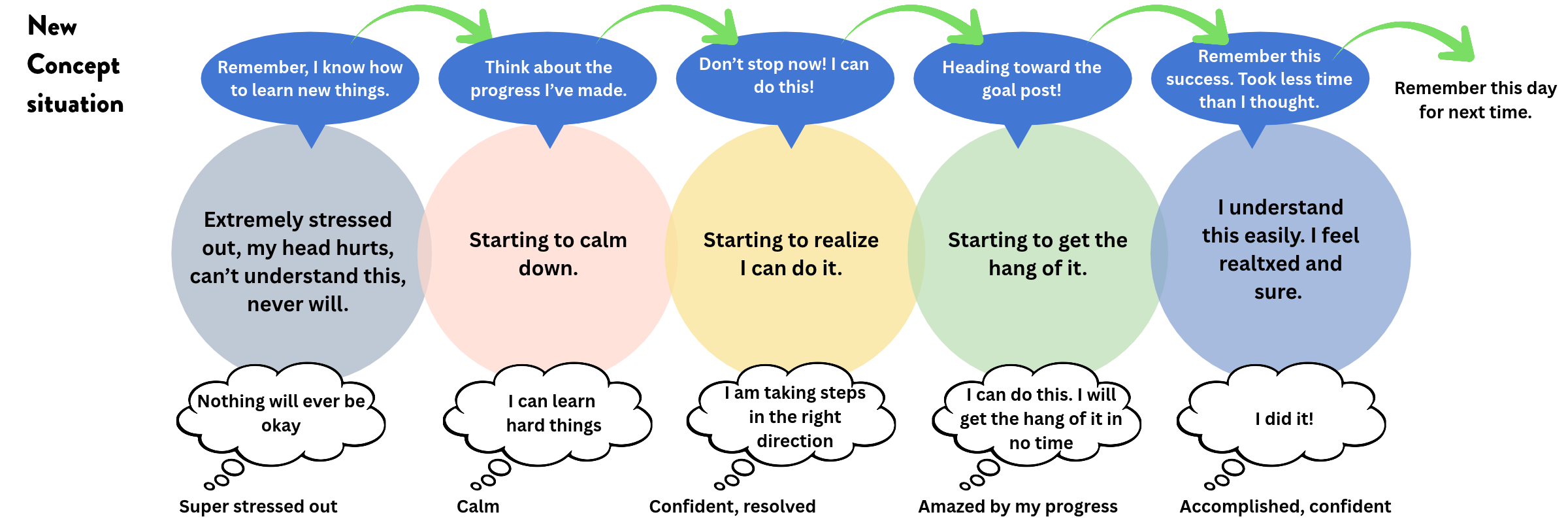
🕑 He and I spent our entire 50 minutes building a set of SocialScales around situations in which he is presented with a new concept. He was fully engaged, offering his own phrasing for each step, which noticeably raised his investment in the whole process.
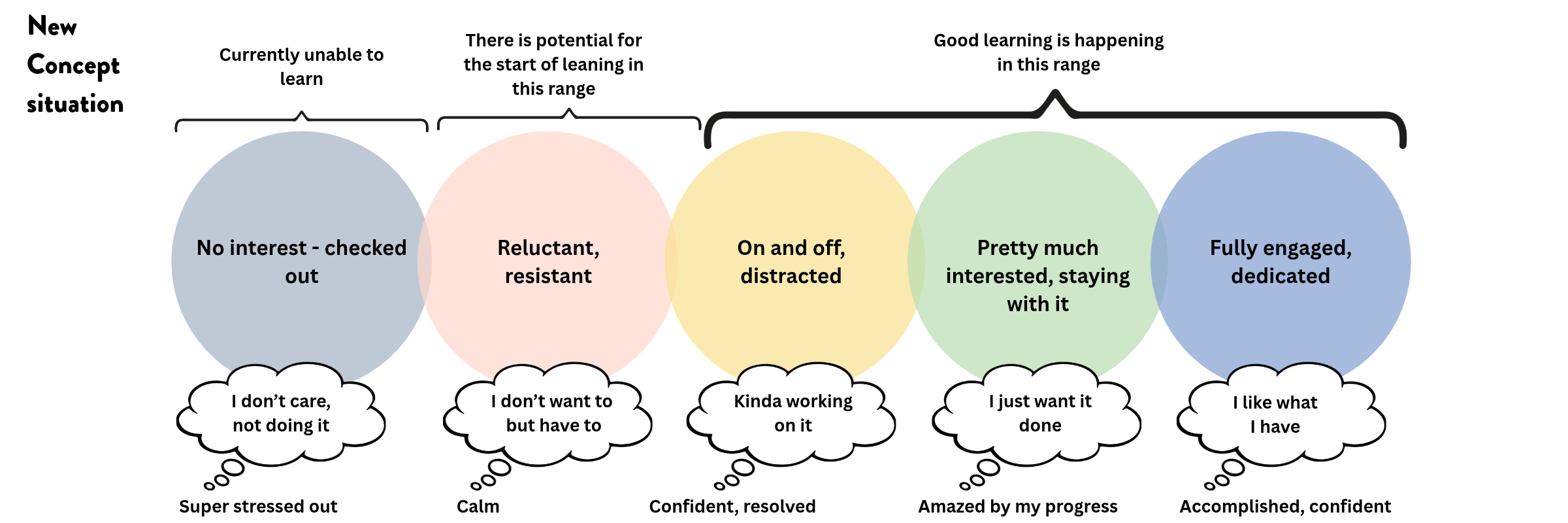
After finishing the text in the circles, as well as adding feelings and thoughts, we discussed what kind of learning is or is not possible at the various points. This clarified to him, and his tutor, that when he is in the grey circle, strategies to move him toward calm are needed before any presentation of new material. 😌 Anything besides finding greater regulation is just not going to be successful.
Partway through, he added something I hadn’t thought to include: a line for remembering the success afterward, so the next hard moment has something to stand on. How wonderful! 🌟 By the end, he asked to print the slides himself. “I want to take these to school,” he said.
If you want to try building continuums like these with your own students, consider exploring SocialScales a bit more. On my website, you can download a sample SocialScale to experiment with: one of the templates for flexibility, a skill that often works its way into our sessions. The full SocialScales program comes with 40 pre-made templates, 30 SocialScale examples, and an email onboarding sequence to guide you along the way.
Next month, we’ll take a look at the role AI can play in our work with SocialScales, and explore how AI requires clinical guidance and watchful partnership. 🤖
Happy holidays-of-the-month to you and those you love!!! 🍂
Anna
Learn at your own pace!
If this glimpse into the Whitefish conference left you wanting more, the entire two-day conference is available as a self-study course on Theramoves: Taking Executive Function to the Next Level: The Through-Line of Math, Writing & Social Learning. Thirteen hours of content from four presenters, including my own sessions. It’s an investment, but it’s a genuine treasure trove, the kind of material you’ll find yourself returning to long after the first watch.