Step Into My Sessions: When “Good Ideas” Get Complicated
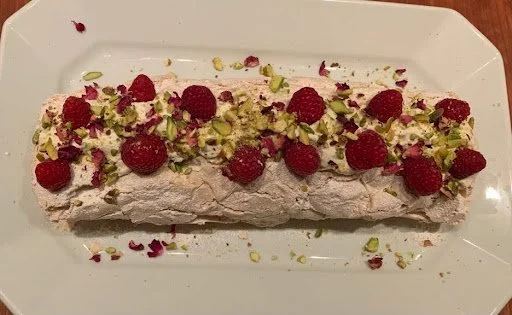
It looked pretty easy until I started...
Ottolenghi's Raspberry and Rose Petal Roulade
Earlier this month, I mentioned wanting to take a bit more time to think about clinical ideas; how they show up in our students, and how they guide our work from week to week.
When good ideas get complicated
💡 Lately, I’ve also been noticing something else: how often a “good idea” becomes much more complex in practice. I was reminded of this recently while making Ottolenghi’s Raspberry Rose Petal roulade. 👩🍳
On paper, the recipe felt manageable—step by step, clearly laid out. But once I started, I realized how many layers were involved. 🥚🧈 Timing the meringue for correct texture, rolling with minimal cracking, and lots of other small decisions along the way. These details weren’t immediately obvious when I first read through the recipe.
It made me think about how often our clinical work feels the same. 🤔
🎯 Many of us have been transitioning to writing rubric-based goals. This is a big shift, not just in how we write goals, but in how we think about what we are targeting, how we measure change, and how these new ideas show up in our clinical work. There is a kind of “trickle down” effect.
When we step back and look at what it means to shift from “traditional” goals to rubric-based ones, layers of meaning begin to unfold. Things get complicated! 😖
Coming at a time when neurodiversity-affirming practices are gaining more traction, using rubrics makes a lot of sense. But still, going from “this is a good idea” to “I know what I am doing” can be a path with twists, stops, and starts. 👉 Just like my roulade.
I was reminded of this recently in a very different context.
The family of one of my younger students was recently required to hire a 1:1 aide, and was placed on a limited school schedule. I received the goals from the company providing support. Here is one example: (Student) will strengthen his ability to navigate peer relationships by recognizing social cues and communicating with kindness and respect. 🎯
🤔 Hmmm…This sounds like it’s saying something important, but it’s actually broad, vague, and difficult to translate into actual work with a student.
✨ And this is where the gap between a “good idea” and usable clinical work becomes very clear.
A quick note about the layers here. ✏️
Beyond rewriting this as a rubric-based, measurable goal, there are other questions that immediately come into view.
How do we measure social learning in a meaningful way?
How do we address the priorities of different stakeholders—parents, school teams, outside providers?
What is actually reasonable for this student to achieve right now?
And, more broadly, is this the right placement for him—or might a different setting support him in a more meaningful way?
These are not small questions. And they don’t have simple answers. It’s this kind of complexity that I find myself wanting to spend more time with.
☀️ This coming summer, I’m planning to slow down a bit; to look more closely at these kinds of questions, to follow ideas a little further, and to think more intentionally about how they show up in our day-to-day clinical work.
Not to find perfect answers, but to better understand the work we’re actually doing, and to begin to see where the next steps might be. 👣👣
🪞 Reflective moment
As you move through your sessions this week, you might pause and consider:
Where does something that sounds clear start to feel more complex in practice?
What do you notice in those moments—about the student, the context, and your own thinking?