
Step Into My Sessions: From Noticing to Knowing: The Power of Double Think
The work of the Double Think:
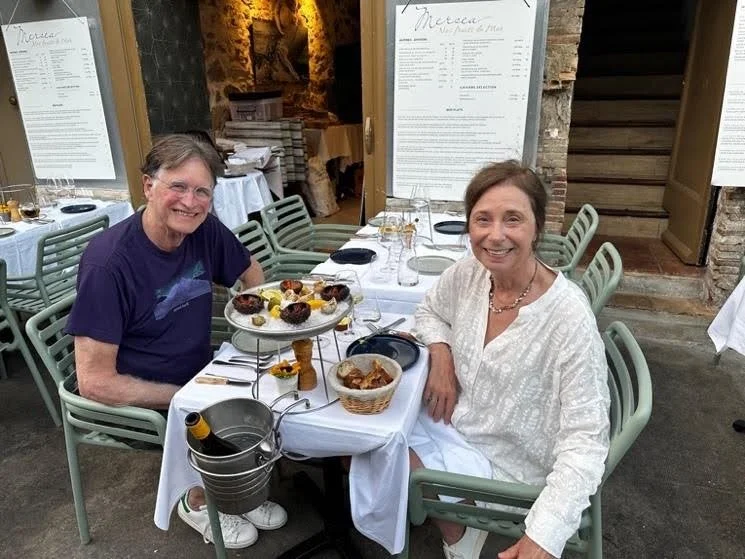
What can you infer about my trip to Antibes?**
You may remember that the term I’ve been using for quite a few years, Double Think, refers to thinking more than once about something you are trying to figure out. So often, our first thought is incomplete, focused on an irrelevant detail, or discounting some of our previous world knowledge. 🧠
When I use the term with my students, it’s not about correcting a student’s first idea or replacing it with a “better” one. Instead, it's an invitation to think a little more. 🤔
Students notice details, then pause to consider which details matter and how they fit together. When they Double Think, they move beyond naming what they see to figuring out what they know. This is the foundation of inference, flexible thinking, and richer conversations. 💬
Let’s look at a therapy example from a few weeks back as an example of integrating the Double Think into greater understanding and complex language
I often show students photos from my daily life. In one session, I pulled this photo up to see what my student would say.
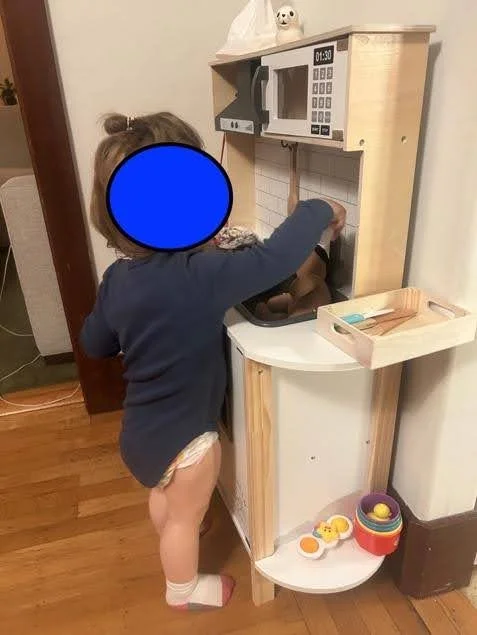
Her first question was “What is he doing?” 🤨
A great opportunity for a Double Think! I wondered how much she could figure out from just thinking more about what she was seeing.
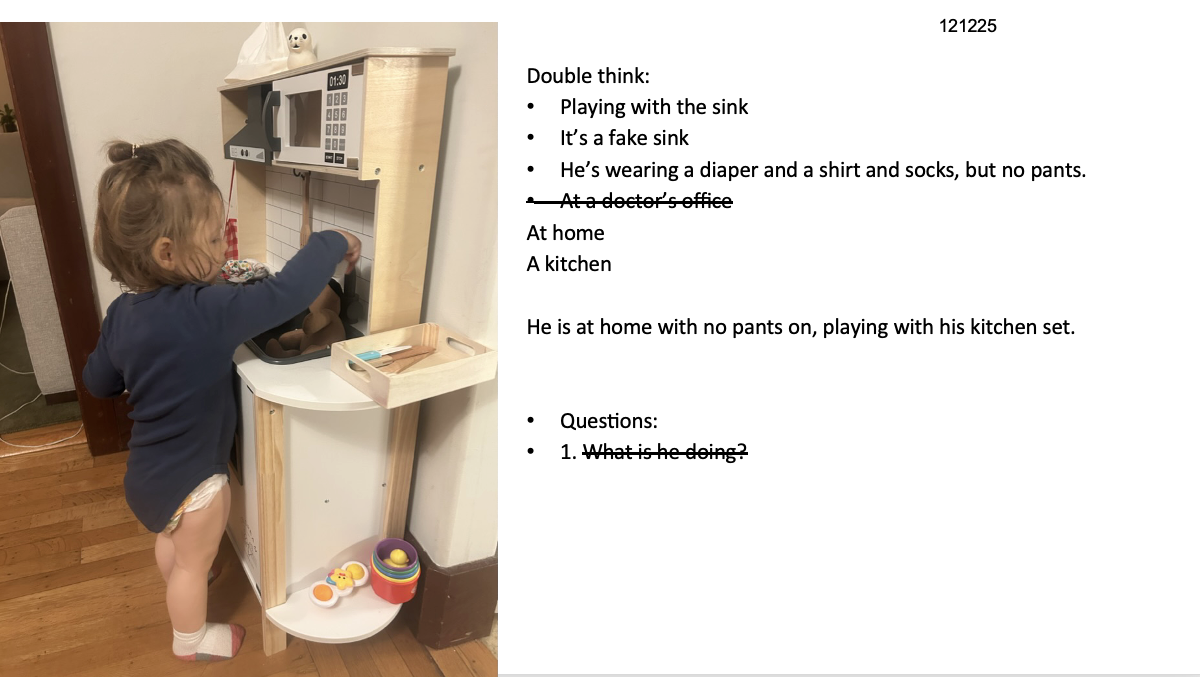
I pulled up a CPPEV template that would create a visual support, and we got to work. She looked more carefully, and made a number of observations. Then, her first guess: “He’s at a doctor’s office?”
I reminded her: “Well, you noticed that he doesn’t have any pants or shoes on…” 👖🙈
“No, not a doctor’s office,” she realized. 🙂↔️
Two more observations – at home and a kitchen, and she was able to complete her Double Think with a terrific inference.
"He is at home with no pants on, playing with his kitchen set.” 🍳🍴
A great 10 minutes of work, as well as a realization that she knew all along. She just needed some extra time, some support, and a way to make her process visual:
Interested in learning more about the Double Think? It’s one of the Practice Activities (with template) in CPPEV:
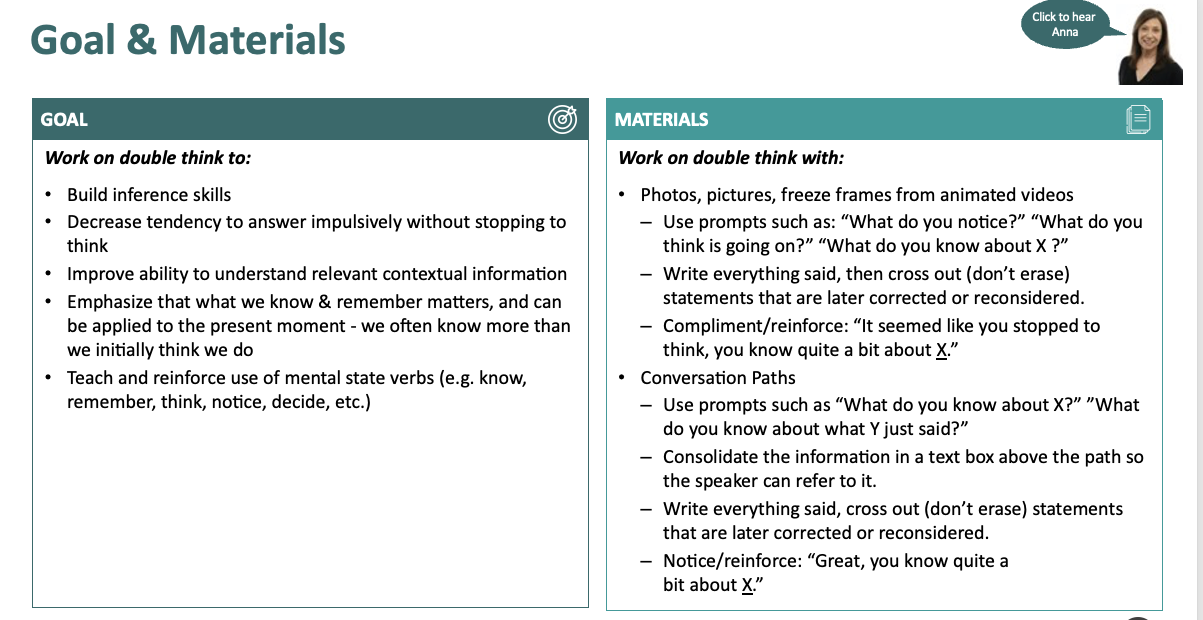
CPPEV includes live narration by ME!
👀 A Noticing Moment…
As a reminder, each week, I’m ending with one small reflection—something to notice, not something to fix. 🪞
When a student asks a question that has an obvious answer—or a very broad “What is he doing?”, what might they really be telling you? Are they confused, curious, or still learning to trust their own thinking?
How might you support them in working through a Double Think?
Happy February, Spring is coming! 🌷☀️
**If you ever find yourself in Antibes (in the south of France), I highly recommend Mersea, where we feasted on the first sea urchins of the season!!