Step Into My Sessions: What Students Say… and What They Can’t Yet Explain
The difference isn’t just in the words—it’s in the thinking those words reveal.
In a recent training with high school paraprofessionals, we spent time looking closely at something that shows up every day in classrooms: how students respond when something goes wrong. 😬
Using Mental State Verbs When Things Go Wrong
The situation itself is often straightforward—but the language students use can take the interaction in very different directions.
✅ When students have access to mental state verbs, they can explain what they were thinking, what they assumed, or what they didn’t realize.
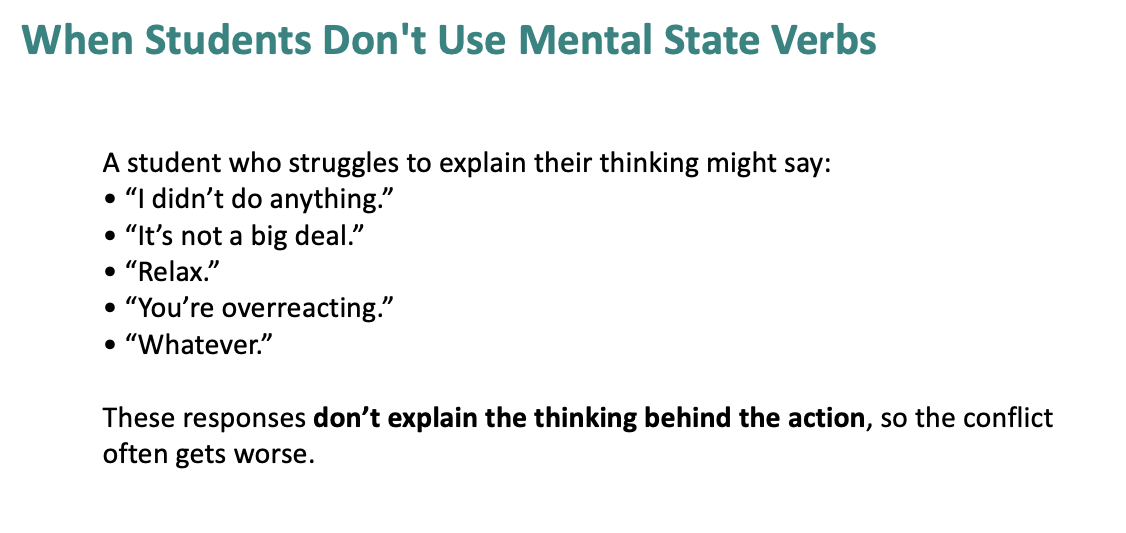
❌ When they don’t, their responses can sound dismissive or defensive, even when that’s not their intent.
We discussed two different student reactions:
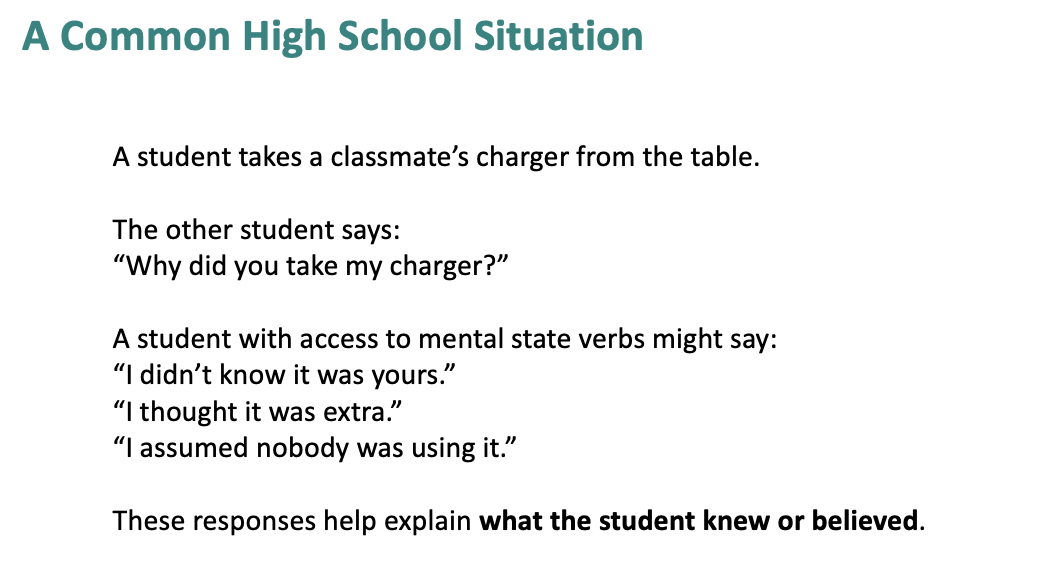
🪟 What we see in these two examples is not just a difference in wording, it’s a difference in access to thinking. When a student can say “I didn’t know,” “I thought,” or “I assumed,” they are giving us a window into how the situation made sense to them in that moment.
That opens the door to clarification, problem-solving, and repair. 🛠️
In contrast, responses like “I didn’t do anything” or “Relax” don’t reveal the thinking behind the action. They can come across as dismissive or oppositional, even when the student is simply unable to explain their perspective. 🤨💭
Without that insight, the interaction often escalates rather than resolves.
Supporting Our Students in Daily Interactions
My goal in that training was to introduce paraprofessionals to mental state verbs—to help them notice just how often these words shape interactions throughout the day.
But as clinicians, we also need to recognize how vitally important they are in the lives of our students. Yes, they matter academically, but their impact goes far beyond that. 🚀💫
✨ Mental state verbs support thinking, help students process and express emotions, clarify intent in conversations, and make it possible to explain misunderstandings. They are also critical for life planning—supporting students as they make decisions, collaborate with others, and begin to direct how their lives unfold.
When challenging life experiences arise (and they will), these are the words that help students reflect, adapt, and move forward.
Being Intentional with Mental State Verbs
🔎 Research shows that students with social cognitive and language differences often acquire mental state verbs less easily than their neurotypical peers. That means we need to be intentional about bringing them into our sessions.
👉 If you haven’t downloaded my list of MSV yet, it’s a great place to start. Try focusing on one or two each week—use them consistently, model them, and build them into your conversations. You might even send one home as a “mental state verb of the month” to extend the learning. 📚
These small, repeated exposures add up over time.
And stay tuned! Over the next week, I will be sharing more ways to keep MSV active and meaningful in your sessions.
Reflective moment 🪞
Where might a student need support not just in expressing their thinking, but in building the thinking itself?
Hope your Spring Break is restful and fun! 😎