Step Into My Sessions: Looking Back, Looking Again: Seeing New Choices in Real Moments

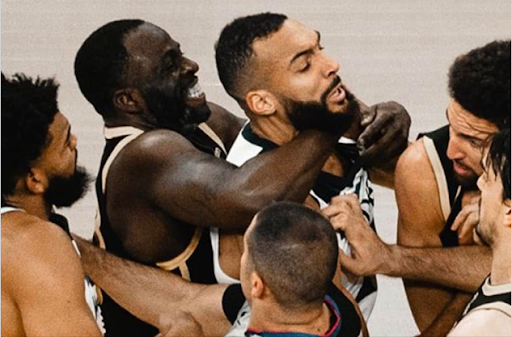
Steph Curry & Steve Kerr feeling angry about a call. Draymond Green feeling angry about a call.
Same feeling—very different choices.
If you read my March 17th Step Into My Sessions,you’ll remember a student I’ve been working with to look back and find new choices. This week, we continued that work, pulling from a context he knows and loves: Warriors basketball.
Turns out, there’s a lot to learn from what happens on the court. 🏀👟
Seeing New Choices in Real Moments
We pulled up a couple of real moments from Warriors games—one with Steph Curry walking away, and one showing Steve Kerr reacting to a call they didn’t agree with, both clearly still upset—and another with Draymond Green responding very differently. 😬
The contrast gave us something concrete to look at together.
From there, we moved into Double Think
We looked closely at what each player might have noticed in the moment, what they might have been thinking, and how that thinking shaped what they did next.
💭 We added thought bubbles: “That was a terrible call,” “That’s not fair,” “I’m still mad”.
We contrasted that with Draymond’s moment, which felt much more like “AAARGH!”. 😡
Out of control, not really thinking at all, just reacting. That difference was important for my student to see. The feeling of anger was present in all of the moments.
💡 What changed was whether there was space to think before acting.
Slowing down in the moment is hard—sometimes for all of us
When feelings run high, it’s much easier to react than to pause and think. 🛑🤔
🌟 That’s why these conversations matter.
When we talk through these moments with students, we’re not just suggesting a different choice. Maybe more importantly, we’re also acknowledging how difficult that shift can be. We’re letting them know we see the challenge, that the feelings are real, and that it takes effort to handle it differently. And that, for many of our students, is especially hard to handle differently.
👉 Considering both of those ideas at once—this is hard, and there may be moments when a different choice is possible—creates a space where students feel understood while being gently supported to grow, bit by bit.
Using real-life examples like these gives us a way to step just outside the moment and look at it together.
When the intensity has passed, we can revisit what happened, notice the thinking, and consider where different choices might have been possible. These conversations don’t create instant change, but they do plant the seeds of reflection. 🌱🪞
Over time, with repeated opportunities to notice, think, and try again, students begin to build their own awareness of what is happening for them in the moment. It’s slow, often uneven work, but bit by bit, those small moments of reflection can grow into greater understanding and more space for choice.
As I was reflecting on this work, I kept thinking about how often we expect different choices without fully understanding what’s happening underneath.
If this resonates, I wanted to share an upcoming workshop from my close colleague and friend, Elizabeth Sautter. She’s co-hosting Regulation and Resilience with Emily Kircher-Morris, focused on supporting regulation in real-life moments like the ones we’re talking about here.
She offered a 10% discount for my community and CEUs are offered! This is going to be a good discussion, so take advantage if you can!
https://elizabethsautter.thrivecart.com/emotional-regulation-and-resilience/?coupon=ROOTS100
Reflective moment
When a student reacts quickly in the moment, how do you balance supporting different options while also recognizing how hard that moment is for them?
🐝 Happy Spring,
Anna